
Adults over 50 considering keto need practical food guidance and a realistic view of what the diet can and cannot establish. The choice may affect meals, energy, and daily routines, so it deserves more than a promise of quick results.
This beginner’s guide explains the eating pattern, age-related concerns, food choices, and ways to assess low-carb desserts. It also reviews the printed offer called Keto After 50 Desserts, including its format and listed cost.
Keto may suit some people, but a diet is useful only when it fits their health needs and lifestyle. A sustainable approach is different from a claim of rapid weight loss or a guaranteed health change. Treat any major eating-pattern change as an individual decision, not a guaranteed breakthrough.
How Does Keto Over Age 50 Work?
Keto reduces carbohydrate intake enough to encourage the body to use ketones as an alternative fuel. Ketosis is a metabolic state in which the body uses ketones, produced by the liver, as an alternative fuel when carbohydrate intake is very low.
Common ketogenic plans typically limit carbohydrates to about 20-50 grams per day. That is well below the adult carbohydrate Recommended Dietary Allowance, or RDA, of 130 grams per day.
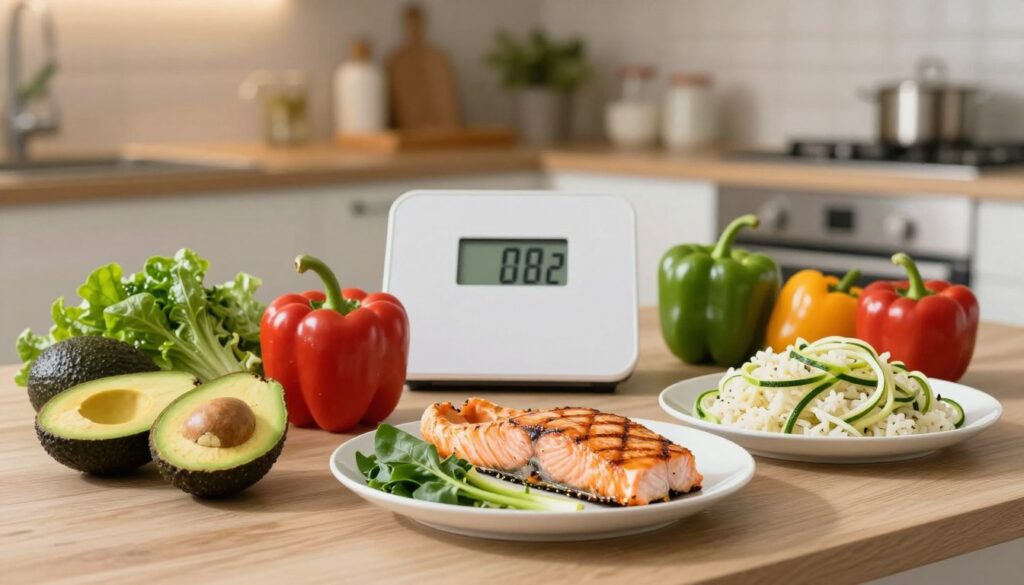
Carbohydrates include sugars, starches, and fiber. The body can turn many carbohydrates into glucose, a key energy source. With much less carbohydrate coming in, the body makes ketones from fat, mainly in the liver.
The basic process has three steps:
- Carbohydrate intake falls to a very low level.
- The liver produces ketones as the body adjusts to less glucose.
- Body tissues can use ketones as an alternative energy source.
That shift describes fuel use, not a guaranteed change in body fat. A person can reach ketosis without losing weight if total food intake still exceeds energy needs.
People sometimes treat a ketone reading as proof that their diet is working. A reading shows ketones at that moment, but it cannot track lasting weight loss or the quality of the full diet.
Carbohydrate limits also differ among keto plans, and labels may count total carbs or net carbs. Those totals are not interchangeable, so a beginner should use one clear method when comparing foods.
Ketones are one part of the body’s energy system, not a score for health. A low ketone reading alone cannot show whether an eating pattern is nutritionally adequate or sustainable.
What Does the Evidence Say About Weight Loss?
Research supports possible improvements in some weight and body-composition measures, but the size and consistency of the effect are not settled. Some measures improved in recent research, while others did not.
Study results depend on the diets tested, the people enrolled, and the outcome measured. They cannot promise an individual’s weight loss or show that every ketogenic diet works the same way.

What the 2025 analysis measured
A 2025 systematic review and meta-analysis included 33 randomized controlled trials with 2,821 adults with overweight or obesity. It examined ketogenic and low-carbohydrate diets with intake at or below 100 grams per day.
Across those diets, the analysis found significant reductions in body weight, body mass index, and body-fat percentage. It did not find a significant reduction in fat mass for that overall group.
The subgroup eating 50 grams of carbohydrate or less per day showed a different pattern. It had significant improvements in body weight, body mass index, fat mass, and body-fat percentage.
These findings are not interchangeable. The broader group’s results cannot be described as proof that every low-carb diet reduced fat mass.
The analysis also reported high statistical heterogeneity. This means the trials varied in their diet plans and participant traits, making one shared result harder to apply to every person.
How longer-term comparisons change the picture
A 2022 Cochrane review summarized by HEART UK covered 61 randomized controlled trials with 6,925 people. Participants had overweight or obesity, with or without type 2 diabetes.
The review found no discernible difference between low- or very-low-carbohydrate diets and normal-carbohydrate diets. That finding applied to weight loss, HbA1c, and LDL cholesterol in short-term studies under 12 months.
The review also found no discernible difference in those measures over the long term, defined as one to two years. Its outcomes and study set differed from the 2025 analysis.
Those reviews answer related, but not identical, questions. One analysis grouped several low-carb levels and reported body-composition measures. The Cochrane review compared low-carb diets with normal-carbohydrate diets across set time periods.
Neither result guarantees what will happen to one person’s body. Improvements in some measured outcomes do not mean every measure improved, or that a diet will remain easy to follow.
For a fair view, readers can track more than the scale and note how their health measures change over time. Readers should judge progress by a pattern of health and body-composition measures, not a single scale reading.
What Should Men and Women Over 50 Consider?
At 50 and beyond, preserving strength and daily function can matter as much as changing body weight. Muscle maintenance deserves attention because muscle mass and activity patterns can change with age.
A useful plan supports strength, adequate nourishment, and movement a person can keep doing. The same diet need not suit every person over 50.
Some adults become less active after illness, injury, or a shift in work and family routines. Others keep moving often but find that certain tasks take more effort. A food plan should fit actual energy needs, not an age label.
Menopause-related changes can also affect body shape, sleep, and how a person experiences daily energy. Keto does not promise to resolve those changes. A diet that is too restrictive can make a tiring routine harder to manage.
Three practical priorities can help keep the focus on function:
- Include an adequate amount of protein at meals.
- Make time for regular resistance work that challenges the muscles safely.
- Choose activity suited to current ability and daily energy.
Resistance work can include weights, bands, or body-weight movements. A healthcare professional or qualified trainer can help someone adapt movements after an injury or during a health change.
The U.S. Physical Activity Guidelines recommend 150-300 minutes of moderate-intensity aerobic activity each week. They also recommend muscle-strengthening activity on at least two days each week.
Those targets are a broad guide, not a test of worth or willpower. A person who is starting from little activity may need a gradual plan that respects pain, balance, and stamina.
Men and women can have different needs, and two people of the same age can have very different routines. A plan that supports strength and can be followed consistently is more useful than one built around age-based assumptions.
What Health Risks Need a Closer Look?
Keto’s health tradeoffs deserve attention because cardiovascular and bone findings are not uniformly reassuring. Careful reading matters because some findings show links or lab effects, not proven causes in people.
Current findings do not establish that keto or one food causes a specific person’s health event. The type of evidence and the limits of each study matter.
Heart outcomes and erythritol
A 2023 review described the evidence on ketogenic diets and cardiovascular disease as controversial. It called for more research, so the heart effects remain unsettled.
A 2025 Cleveland Clinic article reported a study of more than 4,000 people in the United States and Europe. Higher blood levels of erythritol were associated with a higher risk of major cardiovascular events, including heart attack and stroke.
That association does not prove erythritol caused those events. Experiments described in 2025 found that erythritol increased clot formation in non-human models. It also made blood outside the body more prone to clotting.
One serving of a processed food containing erythritol could raise blood erythritol levels 1,000-fold. More research was needed to confirm health risks. The FDA classifies erythritol as Generally Recognized as Safe, or GRAS.
GRAS status does not settle every question about a particular exposure. It also does not turn an association or an experiment into proof of harm in people.
Bone findings and a biological contrast
A 2025 osteoporosis review reported that most of the osteoporosis-related clinical and preclinical studies it examined found harmful bone effects. Those studies linked ketogenic diets with inhibited bone accumulation and damaged bone microarchitecture.
The same review described a possible contrast involving β-hydroxybutyrate, a ketone. It may promote bone-forming osteoblasts and inhibit bone-resorbing osteoclasts.
That proposed action differs from the detrimental bone findings reported for ketogenic diets. It does not show that β-hydroxybutyrate protects bones in people following keto.
Nutrient gaps and early side effects
A limited menu can make it harder to get enough fiber and other nutrients. Low intake of vegetables, fruits, or varied protein foods can leave gaps even when the carbohydrate target is met.
Early adjustment can bring fatigue, headache, dizziness, constipation, cramps, or trouble sleeping. These symptoms can affect energy and daily function. They are not proof that the diet is working.
People also need to consider blood sugar and other health measures when changing food intake. The cause of a symptom or a shift in blood levels may not be clear without clinical review.
Associations and lab results deserve attention, but they have limits. An association or laboratory result is a reason for careful interpretation, not proof that a specific food caused an individual event.
Which Foods Fit a Keto Diet?
A workable keto menu starts with nutrient-dense foods rather than simply adding more fat. Food quality matters, since a low-carb menu can still lack fiber and useful nutrients.
Build meals around protein, unsaturated fats, and low-carb vegetables. Common choices include these five groups:
- Eggs and fish.
- Nuts and seeds.
- Cheese and plain Greek yogurt.
- Leafy and non-starchy vegetables.
- Avocado or olive oil.
Common higher-carbohydrate foods include bread, pasta, rice, potatoes, beans, and sugary foods. Some people limit or avoid them to meet their daily carb target.
That restriction can crowd out fiber if meals rely mostly on meat, cheese, and added fat. The specific mistake to avoid is treating “low carb” as permission to neglect vegetables and fiber.
Leafy greens and broccoli can add fiber with relatively few carbs. Berries can fit in portions that suit the plan, while chia seeds can add fiber to a meal or snack.
The Dietary Reference Intake for fiber for adults ages 51 and older is 21 grams per day for women and 30 grams per day for men. A person can use food labels and a simple food log to see whether meals approach that amount.
Fiber needs planning when common grain and bean foods are limited. Add vegetables and seeds across meals, rather than expecting one small side dish to cover the day’s needs.
Check fiber intake alongside carbohydrate totals so a low-carb menu does not become a low-fiber one.
How Can Beginners Make Low-Carb Desserts?
Low-carb desserts are easiest to assess when the recipe gives clear serving sizes and nutrition information. Portion details help a person compare treats without assuming “sugar-free” means unlimited.
Check the ingredients and nutrition for the serving that will actually be eaten. Alternative flours, sweeteners, and added fats can change a dessert’s carb count and texture.
Ingredients that make keto baking workable
Almond flour and coconut flour replace wheat flour in many keto baking recipes. They absorb liquid differently, so they do not always swap into a recipe in equal amounts.
Eggs help bind ingredients and add structure. Psyllium husk powder can add fiber and help dough hold together, especially in recipes without wheat.
Alternative flours and sweeteners often need label-checking for serving size and carbohydrate content. They can also take extra pantry space, since one flour rarely works for every recipe.
Diet Doctor’s dessert collection, updated July 31, 2026, contains more than 50 recipes. That range can help a beginner compare styles, but each recipe still needs a close look at its portion and nutrition details.
A simple coconut fat-bomb example
Diet Doctor’s coconut fat bombs take 10 minutes to prepare and 35 minutes to freeze. The recipe makes 10 servings, with 1 gram net carbs and 91 calories per serving.
Ingredients include unsalted butter, unsweetened shredded coconut, cardamom, cinnamon, and vanilla extract. The short ingredient list shows how a simple dessert can rely on fat and flavor rather than flour.
Serving size changes the comparison. A recipe may list nutrition for one small piece, while someone may eat two or choose a larger portion.
A nutrition label or recipe estimate describes only the portion it names. Compare the nutrition for the portion actually served, not just the recipe’s smallest listed serving.
Is Keto After 50 Desserts Worth the Price?
The offer’s usefulness depends on whether its recipe format and printed delivery match what the buyer wants. Format and fit matter as much as the promise of a large recipe collection.
Keto After 50 Desserts is a printed cookbook mailed to the buyer, not a digital download. The order form offered no digital version when checked on October 14, 2026.
What the offer includes
The cookbook-style offer covers cakes, pastries, cookies, chocolates, candies, ice cream, and other sweet treats. Its stated format includes step-by-step instructions and ingredient lists.
It also includes serving images and macronutrient information. Those details may help readers choose recipes and check their nutrition, though a recipe’s listed values still depend on its serving size.
Two named bonuses are Keto After 50 Superfood Milkshakes and Keto After 50 Breads & Pastas. Together, the stated range reaches beyond desserts into drinks and other comfort foods.
That variety may suit a buyer who wants one printed collection with several types of recipes. Step-by-step instructions and ingredient lists can make a recipe easier to follow, while serving images offer a visual guide.
Ingredient access and nutrition details still deserve a look before someone commits to a recipe. The offer’s promotional weight-loss or health claims are not the same as established evidence about keto.
Price and purchase terms
On October 14, 2026, the listed one-time price for the book was $9.00. Shipping and handling was $7.95, bringing the total checkout price to $16.95.
The order form showed a 60-day refund window on that date. The guarantee may be subject to conditions, so the stated window does not by itself explain every refund rule.
The printed format means buyers should expect a mailed book rather than immediate access to recipes online. That distinction may matter to someone who prefers a digital cookbook or wants to search recipes on a phone.
Buyers can weigh the stated variety, recipe details, mailed format, and total cost against their needs. Check the checkout total and refund conditions before placing an order, since both affect the practical value.
How Can Beginners Start Carefully?
A careful start begins with a clear picture of current health and a conversation about medicines that may be affected by carbohydrate changes. A personal baseline can help show whether the plan changes energy, sleep, or key health measures.
People taking diabetes medicine should not change a dose on their own. Insulin and sulfonylureas can raise the risk of low blood sugar when food intake changes.
Set a personal baseline
Before changing meals, note usual foods, energy, and sleep. A short record can show what is normal for that person, rather than relying on memory after a new routine begins.
Common measures to discuss include blood pressure, LDL cholesterol, fasting glucose, and HbA1c. These measures can help a healthcare professional judge how a change fits the person’s health needs.
Someone can also note current movement and daily tasks. That context helps separate a change in diet from a busy week, poor sleep, or a shift in activity.
Make medication and health checks first
A healthcare professional can review medical conditions and medications before a major diet change. That conversation matters especially for people with diabetes who use insulin or sulfonylureas.
Carbohydrate changes can affect blood sugar control and medication needs. A clinician can help set monitoring steps and decide when the plan should be adjusted.
A beginner can use this three-action checklist:
- Discuss whether keto suits current health needs and medications.
- Agree on which measures to track and when to review them.
- Reassess whether the food plan is workable in daily life.
The plan should also leave room for sleep, work, family meals, and food preferences. A routine that demands constant effort may be hard to maintain, even when its rules seem clear.
If the plan disrupts daily function or cannot be maintained, a less restrictive pattern is a reasonable alternative to discuss.
Conclusion
Keto can be a useful option for some adults over 50, but its value depends on fit, evidence, and staying power. It may help some people manage carbohydrate intake, but it is not a guaranteed breakthrough or the only route to healthier habits.
Before making a major change, readers can bring their goals and medication list to a healthcare professional. That conversation can help them weigh personal health needs against the effort of a strict diet.
A smaller change may be a better first step than a full shift in eating habits. Before changing the menu, arrange a clinician conversation and choose a first step that can be sustained.